Tuesday, 17 November 2015

Being Lean in New York City


Being Lean in New York City!


New York City - the bustling metropolis made up of 5 "Boroughs" (Manhattan, the Bronx, Brooklyn, Queens, and Staten Island) with a 
burgeoning total permanent population of 8.4Million people.  While the Boroughs are distinct in terms of municipal government, they collectively form the legal city entity known as New
York City.  

The Borough of Manhattan alone has a permanent population of 1,626,159 people, all in an area of 23 square miles located on the island of Manhattan. That’s an average of 70,702 people per square mile.  And believe me, there are many of those 23 square miles that don’t have ANY residential capacity (office buildings, warehouses, streets, parks, etc). As much as 50% of that area is non-residential.  A figure Ihave heard a number of times is a permanent population density in Manhattan of over 150,000 people per 'residential square mile’.  Think of a square, 5,280 feet long and 5,280 feet wide, and stuff 150,000 of your closest friends in there.  It’s going to be a bit tight!  No wonder the prevailing, and only solution in NYC is to go “up”.  Residential towers that are 30 and 40 stories tall, with 3,500 units in them.

It is believed that on a typical work day, the Borough of Manhattan’s population of 1.6Milllion swells to an astounding 2.8Million simply due to
commuters coming into the city for work. That clearly is a logistical challenge, getting them all in, and then out of the city in a safe, timely way. Particularly since Manhattan is an island. So they all have to travel by bridge, subway, tunnel or ferry. Lots of potential bottlenecks.  Add to that the average estimate of over 1Million “visitors” in Manhattan on any given day, and you are dealing with a Borough that has to accommodate roughly 4 Million people travelling, shopping, working, going to school, sightseeing, and just generally going about their business.  As you can see, if ever there was a place that needed to look at how to make things “flow”well – NYC has to be it!

I was in Manhattan a few weeks ago.  Not my first rodeo there. I have been in NYC many times, and each time I marvel at how it manages to just work! 

Walk down 7th Avenue in midtown and just watch the hundreds, even thousands of people moving and migrating in all directions across busy intersections and sidewalks that are about 8 feet wide – around street vendors carts, fire hydrants, lamp posts, sandwich board signs, and at least 1 in 5 people just stopped, looking around in awe and amazement.  I’ve often thought of fluid dynamics as the analog for this constantly shifting sea of people.  People just continue to move and flow, dynamically
finding pathways through and around the dense crowds, obstacles and other barriers they encounter, moving toward their destination.  It’s like watching a fast running stream find its way around rocks and boulders.


But I digress. While there are so many examples of both well working and intentional “flow”
as well as even more opportunities to improve “flow”, I want to focus on a particular example of a specific application of Lean we experienced on our recent trip. What would Manhattan be without a shopping trip!

Macy’s flagship store is in Manhattan at 34th Street and Broadway, bounded on one side by Herald Square. It is 2.2Million square feet of shopping. 

The 2nd floor “Shoe Salon” is a whopping 139,000 square feet alone.  That particular retail floor underwent a complete makeover in 2010.  Redesigned by Charles Sparks + Company, Macy’s Manhattan now boasts the world’s largest shoe floor! Not only was it upgraded aesthetically,   but also the way the floor works.  How it runs.  How it flows. This link will take you to some pictures of the redesigned floor.


On a normal business day (eg, not a big sale day), Macy’s can sell in excess of 2,500 pairs of shoes through that floor.  In order to sell 2,500 pairs of shoes, they estimate that 3 to 4 times that many pairs of shoes are tried on.That means that 7,500 to 10,000 pairs of shoes are pulled from stock, brought out onto the floor, and then collected and returned to stock every day.  While it was and isa shopping mecca on the surface, there were a number of operational issues that Macy’s needed to sort out to make the best use of that space from when                                                                         considering it from a retail perspective. 


Some of the challenges that they faced included:

  • Retail \space used for stock - the cost (and value) of retail space in mid-town Manhattan is extremely high – as much as $75/square foot (compared with $6 to $10 square foot in many other large urban area markets).  Up to 7,000 square feet on that floor used to be reserved “behind the wall” as stock space on the shoe floor.
  • Shoe Safari – in order to get a shoe for a customer, the sales associates 
    would have to leave the floor, and take the sample shoe that was on display back into the depths of the stock room to try and locate the same shoe in the size/colour that the customer asked for.  That
    depended of course on being able to navigate their way through the stock-room-jungle, and hope that they could find the right section, locate the right model, and find the right size and colour, and return safely to the location they last saw the customer – of course, often while waiting, the customer has moved on to somewhere else on the floor and that is a whole new safari.
  • Multiple sales distraction – when a sales associate was asked “do you have this in a size 8”, they would start their safari to the stock room to check for the shoe, only to be approached by an average of 3 other customers while on their way to the stock room asking them to look for a shoe for them as well.  Even with minimal distractions, it was often taking 5 minutes or more to get back to the customer with an answer (and preferably, the shoes they were looking for).  They were losing sales because customers got tired of waiting.
  • A sea of un-loved shoes – with all of the time spent on shoe safari, shoes that had been brought out to the floor often stayed there, accumulating, piling up, and not going back into the stock room until after the store closed.  That caused an unsightly mess on the retail floor, AND meant that if someone else was looking for that shoe in that size and colour, they couldn’t find it, because it wasn’t on the stock shelf but rather out under a chair or piled in a corner waiting to go back into the stock room.
  • Close, but….  – Once the sales person would return to the customer with the shoe, at least one third of the time the customer would then ask if they had it in a different colour, or a half size in either direction – which would start the process all over again. 
  • Are you speaking my language? – with a shoe floor the size of two massive New York City blocks, sales associates were expected to be familiar with a particular ‘territory’.  Shoes were organized in clusters by manufacturer with the associated stock in the behind-the-wall stock room near the display of shoes from that manufacturer.  So if you were in the Cole Hann section, and asked a sales associate to go on a safari for you for a Cole Haan shoe, they were at least “in their territory”.  But if you happened to have picked up a shoe from the Franco Sarta collection at the far end of the floor while looking around, then handed it to the Cole Haan guy – he would have to hike all the way down to the far end of the store to look for unfamiliar stock in an unfamiliar stock room, using unfamiliar stock codes and styles – abandoning his customers while he went to a foreign land. 
  • What about Hoboken? – and if the sales associate finally came to the conclusion that they just didn’t have the exact shoe the customer was asking for, and if the customer had managed to stay patient that long, the customer would often ask “do you think the store in Hoboken might have it?” (replace “Hoboken” with a list of any Macy’s stores!).  The sales associate would then go to the computer at the sales station, and start to search the master stock list – knowing that it was at least 24 hours old and just because it says there’s a pair of black, size 8 boots in Staten Island – it doesn’t mean they are still there.
  • What exactly do I do here? – With all of the time on safari, and having to retrace the steps for minor customer change requests (half size bigger, black instead of blue), etc – the sales associates spent much more time searching than doing what they are hired for – selling!

It was pretty clear that this wasn’t the best way to sell shoes.  So what was Macy’s to do next? 

Macy’s decided that it needed to think about this from a customer perspective (great start!).  They sent a team in to discretely follow customers (at a distance) as they first came on the floor, through to when they left (they went to the Gemba), recording what was really happening on the floor. They decided to ask shoe floor customers what they liked about shopping at Macy’s (gathering the Voice of Customer), and more importantly, what frustrated them.  And that’s just what they did.  They sat down with some customers,  some sales associates  (Voice of Employee), and some vendors (Voice of Stakeholders) from their supply chain and asked them what they felt could make the shoe buying experience not only better (future state) – but the best experience they could imagine (dream state).  Their focus was on how they could increase the value they created for their customer.  

After working through multiple focus groups, performing environmental scans, engaging their retail design teams, looking at and understanding other shoe store innovators, and also purposely other non-shoe store retail innovators, Macy’s redesigned the floor, how it flows, and the whole process behind the sales experience. They did that based on some emerging desired state objectives:

  • Never let a customer spend more than 1 minute looking for help (a target they set based on customer feedback)
  • Provide each customer with a complete experience from inquiry to sale
  • Don’t limit any sales associate to one brand or manufacturer
  • Don’t leave the customer – stay engaged
  • On the spot, give customers options with up to the minute information on availability, colour, styles 
  • Maintain a clean and organized retail space
  • Real time master stock inquiry – ‘closest to me’ searches
  • DON’T WASTE RETAIL SPACE FOR STOCK!!!!

Now all they had to do was make it happen.  One of the non-shoe-store retail innovators they looked at was Apple.  They knew that if they walked into an Apple store, whomever they engaged with could search any stock they carried, locate it easily, and complete the transaction on-the-spot without having to send you to the “sales counter”. 

Apple had started doing this back in 2005.  Why not at Macy’s too???

Make it easy for me as a consumer to spend my money.  That should be one of the retailers’ primary focus areas.  Find a way to take payment on the spot.


  Next, Macy’s proceeded to implement their plan:

  • They moved all of the stock on that floor to a non-retail basement level – recovering up to 30,000 square feet for more retail (and revenue generating) activity
  • They redesigned the layout of the retail space (including the recovered 30,000 square feet). The display areas were updated, new brighter lights, quality decorative accessories, and most important, they laid out the display areas to optimize shopping. Based on sales history, they knew which manufacturers were complementary to others for any given demographic, and they located the ones that tended to be shopped by the same demographic next to each other in order to make it easy for the customer.  They essentially discovered and “paved the cowpaths”.  
  • They move to a wifi enabled bar-code hand held scanner for all sales associates 
  • They updated their inventory system to tie into the Point of Sale system so that inventory levels were current and up-to-the minute
  • They empowered their sales associates to sell “any stock” – not just that brands that they were in close proximity to
  • They implemented mobile payment capabilities on the sales associates hand held scanners, allowing them to take payment directly from the customer – no more passing them on to the line ups at the cash register counters.
  • They designed and implemented a process stream for the handling of stock and inventory as a “pull” model – based on customer demand.

  So how does it all work now? What actually happens on the Shoe floor? 

The Sales Associates:
  • Sales associates are still positioned throughout the shoe sales floor – though they are less confined to a single manufacturer or brand.  
  • They each have a wifi mobile device to look up stock, request stock to the floor, search real-time inventories, and take (non-cash) payment.
  • There are at least 2 sales associates per brand collection at all times on the floor, sometimes three.
  • Sales associates have been trained to watch for customers carrying single shoes around in their hands so they can approach the customer to ask if they can get a particular size for them.
  • Sales associates are trained in advanced customer service skills and focus on customer engagement (as opposed to stock-safaris).
  • Because they don’t need to leave the floor, they can spend more time engaged with customers and actually selling shoes.
  • When a sales associate tells a customer they will get the shoes they are looking for, they encourage the customer to continue looking around (anywhere on the floor) and tells the customer to just bring any shoe they are interested in back to them – this keeps the customer occupied, and enhances sales
  • If a customer decides to buy one or more pairs of shoes, the sales associate offers to complete the transaction right there.  They scan the product again as a
    ‘sale’, and take payment by scanning a credit card into the mobile Point-of-sale system.  This both completes the cash transaction, and removes that item from the stock inventory list in real time.

Supporting the Sales Associates:
  • There is an inventory management “stock-picking” team located in the basement area where all shoe stock is now located.
  • The stock-picking team have mobile devices too. When a sales associate clicks on a particular shoe (size, colour, style) – that gets immediately transmitted to the stock picking team who find the shoe, scan it off the shelf (indicating in the inventory system that it has been pulled but is not yet sold), and puts the shoes in the dumb-waiter for transport to the shoe floor.
  • There are a team of discrete “shoe-runners” on the shoe floor, discretely located near 3 dumb-waiters. 
  • Shoe-runners have mobile devices that indicate which shoes are on their way up, and which sales person they are meant for.  The shoe-runner takes any shoes
    that have come up the dumb waiter, scans them (to indicate that they are now on the floor) and then makes a loop dropping them off to their respective sales
    associates.
  • Once a “drop off” run is complete, the shoe-runner makes one more circle of their area picking up any shoes that had been delivered but not taken by the customer. 
    These are scanned and sent back down on the dumb waiter.
  • The stock-picking team will take the returned shoes off the dumb waiter, and replace them on the stock shelf, with one last scan to indicate they are back in the stock room location again.

What does it all mean? 

For the Customer: Now, when a customer comes off the escalator onto the 2nd floor of Macy’s flagship store in downtown Manhattan, they are greeted by bright, neat and tidy, enticing and appealing visual layouts and displays across the 139,000 square feet of shoe shopping.  The sales associates are attentive, engaging, and are focused on helping you from “just looking” to “thanks for your purchase today”.   Once you are on the floor, find a shoe and ask the sales associate if they have your size and/or colour, you will be trying your shoe on in less than 3 minutes. The sales associate scans the shoe and immediately knows if they have the shoe is in stock, in the right colour, in the right size.  The average time for the simplest transaction (getting a customer looking for a single pair of shoes the ones they want to try on) has been reduced to 3.5 minutes. At first, it was thought to be too fast!  It meant the customer wasn't continuing to shop while they were waiting. 
  
For the Sales Associate: They spend their time engaging and meeting the needs of the customers.  Doing what they were hired to do, sales.  Resulting in a much higher level of job satisfaction and morale.
  
For Macy’s: They are leveraging the best use of one of their most expensive assets, floor space. No longer tying up valuable retail space for non-retail use.  They are selling more shoes. They are satisfying customers.

The shoe salon on the second floor of Macy’s flagship store in Manhattan  
is an aesthetically pleasing, neat and tidy, well-choreographed ballet now.  And to the typical customer, they don’t even realize it.  Which is the point.  It runs so smoothly, and engages the customers in a superior sales experience. And for shoppers, whether on a mission or just casually looking around, they make it easy for you to spend your money.

When I asked the shoe sales associate we interacted with about these changes since 2010, he said they were ‘purposeful’ and ‘designed to
improve the customer experience’.  I asked if he had ever heard the term “Lean” used in relation to the redesign. His answer: “I think I am less “lean” than before because I don’t have to hunt the 139,000 square feet of store for every pair of shoes a customer asks for!.”  Doesn’t matter what you call it,
it’s the results that will speak for themselves. 
 

Tuesday, 25 August 2015

Sharing resources - a "fresh set of eyes" - or "Shinsen'na me" as they would say in Japanese!


"You can't reach for anything new if your hands are full of yesterday's junk"  - Louise Smith 


Early in my personal and professional Lean journey I realized the power of a fresh look at a process or product. Someone that doesn't have baggage and history. In fact, where possible, someone who isn't acclimated to the same departmental or corporate culture as those who deal with the process or product every day.

I experienced it first hand when our Greenbelt cohort were delivered to a "host" site for each of our Lean Greenbelt modules.  As part of the "applied learning" portion of our training and certification, we found ourselves in unfamiliar businesses, and even unfamiliar industries.  This was even more apparent in our Blackbelt programs and cohorts.  While the environment may feel unfamiliar for many or most of the cohort, that unfamiliarity eventually (and quickly) gave way to providing opportunities to ask questions that the host organization often didn't challenge.  They, like all of us, tend to rely on, and in some cases - rest upon, the tacit knowledge and beliefs that we have acquired from within the organization.  Regardless of whether that knowledge and those beliefs are valid or even relevant.

This isn't breaking news!  In many aspects of our personal and professional lives, we are at least aware, if not vocal about the need to "let go of the past" or "don't jump to conclusions", or "it has to be that way - just because".   Having someone from outside the "inner circle" challenge the status quo, particularly if they are from entirely difference industries and background, but are good critical thinkers can unearth what may be obvious to them, but just assumed by us.  So how do we engage the front line team members involved in the process or product, and still avoid bringing too much excess baggage along on the ride?


About two years ago, when I was drumming up interest in creating a local Professional Practice Group for Lean in the Greater Vancouver area, one of the ideas I started to float was the concept of developing a "Lean Resource Brokerage" or "Lean Exchange Program". As I met more and more people from a variety of industries, all focused on using Lean to drive continuous improvements, it became  And as we grow our informal Lean network, making contacts in these other businesses and industries, we can't help but talk about both successes we have had, as well as challenges.

It was during one of these conversations with someone leading Continuous Improvement at First West Credit Union that the idea came up about possibly trading Lean certified resources for short, very specific activities in order to bring some "fresh eyes" to our Kaizens.   Since then, I have continued to test this idea and concept.

Last week, we had our first event.  Kam Raman, VP, Member Relations and Trade Services at Central 1 Credit Union and BCIT tried our first "exchange".  Kam has been a great supporter of the idea since it first came up. And I have been wanting to actually test this in a real environment.

Central 1 is in the early stages of their Lean journey.  They have strong leadership and commitment. So they are not suffering from inertia.  In fact, they had planned some specific kaizen activities, and had identified a facilitator from within their team.  The facilitator was keen, had basic Lean skills, but had not had real experience leading a cross functional kaizen.  So Credit 1 reached out to us to see if we could engage in a Lean Exchange to provide some outside eyes, "Shinsen'na me".  Some guidance around the kaizen design itself, some involvement during the kaizen to direct the conversations and activities to ensure the objectives are addressed, and some reflection and feedback afterwards to help the Central 1 Team improve for future kaizens.

We attached one of our Lean Blackbelts to their project, and worked with their team to review the objectives and design, and to be there to participate during the kaizen to lend support to the facilitation.  Afterward, our Blackbelt provided the facilitator with concrete and constructive "hansei" to help them further improve their kaizens going forward.  And the feedback we got from Central 1 was extremely positive, and gratifying.

The Lean Exchange Program (proof of concept!) was a success.  We definitely see the value, and look forward to extending this program across the Lean community.

Thursday, 20 August 2015

A summary of a whirlwind trip to Germany and Italy - the European Lean Benchmarking Tour

If this is Monday - it must be Porsche! 


For those of you that have asked (and those of you that haven’t – but may be interested) – I have organized my pictures from my trip to Europe in June.  I was there as part of my program to certify as a Master Blackbelt in Lean Methodology (Lean is a name given to a methodology focused on Continuous Improvement. I have completed my Greenbelt and my Blackbelt certifications already).

In June, I was part of a small group (9 people) that went to Europe with our Lean training and certification partner, Lean Sensei International.  This was a Lean Benchmarking Tour: an opportunity to visit and see Lean in action at organizations that are considered exemplars in the adoption and application of Lean to drive continuous improvement and increase customer value.  In 2013, as part of my Blackbelt certification, I was also fortunate to travel to Japan to see many organizations there that have been applying Lean and the Toyota Production System for many years.  For this European Lean Benchmarking Tour, the 9 people that attended were comprised of:
·         2 master coaches from Lean Sensei International
·         3 Master Blackbelt Candidates (myself, a colleague from work – Colin Jones, and a third from Genentech in San Francisco area – Marvin Ilasco).
·         2 Executives interested in Lean from Norsat in Richmond BC
·         2 Executives interested in Lean from Lucy Electronics in Dubai.

Below are the pictures from the trip.  They are organized chronologically (Frankfurt was my first stop, Stuttgart next, etc).  Essentially – the trip was focused on touring a series of automotive manufacturers (Lean has much of its roots in the Toyota Production System that was introduced and refined by Toyota Motors).   Something to note though:  Each of the automotive factories we visited had a “no pictures allowed on the manufacturing floor” policy….. but they also ALL had incredible museums to tour and learn about the history of the companies.   There are plenty of youtube videos (that have been approved by the manufacturers) available on the internet showing the actual production processes and factories we toured. 

So the pictures below are made up of:
·         General touristy type scenery shots around the various cities we visited (in particular, below, the first stop, second stop, fifth stop, eighth stop, ninth stop, and twelfth stop)
·         Pictures from the various museums and welcome centres we visited. (all the rest)!


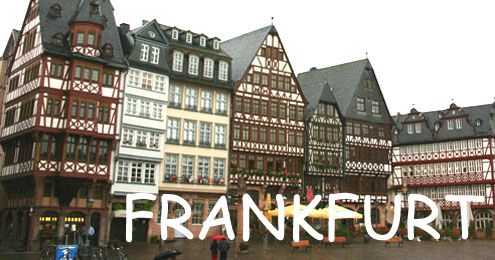
First stop: Frankfurt Germany:  Pictures of Frankfurt   
I arrived in Frankfurt on June 12th, giving me time to acclimate to the time zone changes and long flight.  Frankfurt was for the most part a fairly modern city with a large modern walking/shopping mall. At one end, on Saturday, a market sprung up for the day in an area that was (and would be again the next day) a large empty square.  Fresh breads, cheeses, vegetables, etc.  At the other end was a street fair paying homage to northern Italy! (I would be heading there shortly).  Street vendors and food outlets.  Walking toward the river, I came upon the “old town” square – a delightful, quaint square in remarkably good shape, with some buildings dating back 6 centuries.  Something to watch for in the pictures; while walking the shopping mall, there were street vendors wearing charcoal grill BBQ’s (a frame that went over their shoulders with a container on the back for buns, and the grill strapped in front of them at their waist).  It was close to 30 degrees Celsius out – I can’t imagine how hot these guys were!!


Second Stop: Stuttgart Germany:  Pictures of Stuttgart  
From Frankfurt, I took the train to Stuttgart.  A fairly short (just over an hour) ride.  Stuttgart is the home of the Porsche factory and museum, as well as the headquarters for the Mercedes factory and museum.  Stuttgart is a fairly industrial city, though with very little exploration, I found again the local walking/shopping mall.  Germany is actually divided into 19 provinces, each with its own parliament – and Stuttgart is the Capital of the Baden-Wurttemberg province.  At the end of the walking mall was a beautiful park with fountains the provincial government buildings.  As in all of the cities (and throughout the tour) – the food and restaurants were fabulous (there are a number of pictures of food and the group enjoying local restaurants).


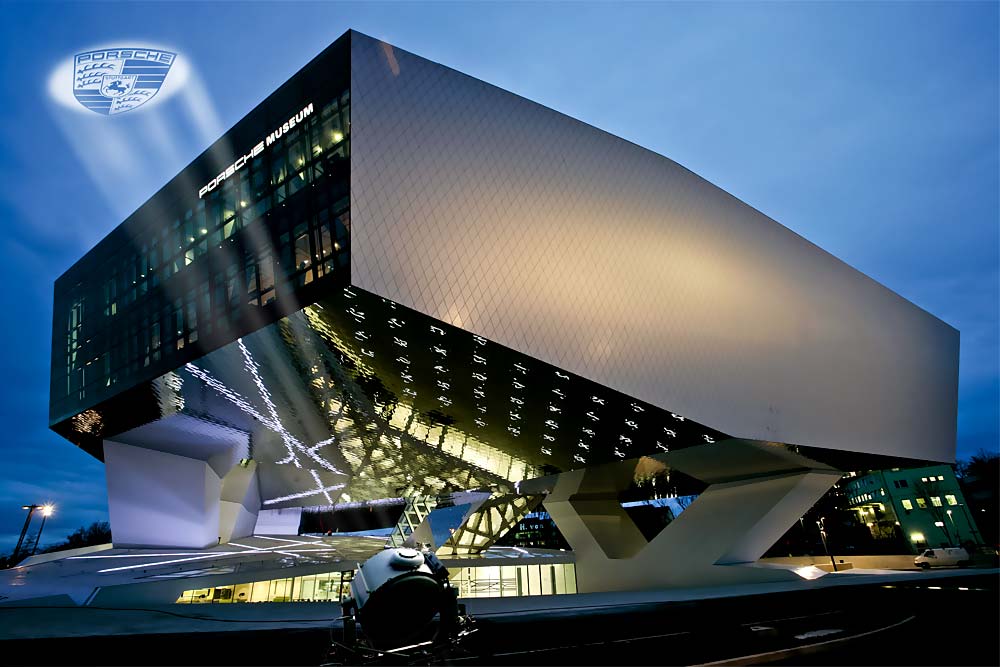
Third Stop: Porsche – Stuttgart: Pictures of Porsche 
After an evening familiarizing ourselves with Stuttgart, the next day we started with a tour of the Porsche Museum.   This was on June 15th.   The day before was the last day of the 24 Hours of Le Mans race, and Porsche had a huge party with large screen live broadcast of the race (the Porsche No 19 car won the race).   One of the pictures below shows our group sitting just outside the museum where they had a Porsche 919 race car on display.   The Museum itself was a beautiful piece of architecture – curving and spiraling floors reaching up 5 stories.  And throughout the museum, we were able to see (and touch) all of the cars Porsche had manufactured, including some concept cars that never made it to production.  The tour through the production factory was as equally impressive.  Seeing the production of high performance cars in a mixed-line (all models interspersed based on customer orders).  The blend of meticulous engineering (both the cars, and the production process) with a mix of robotic and human activity. 


Fourth Stop: Mercedes – Stuttgart: Pictures of Mercedes
The other stop while in Stuttgart was the Mercedes factory and museum.  This museum was incredible, and enormous.  Eight large floors of displays, each floor winding down to the next floor forming a giant spiral (this was a common design as it allowed the cars to be moved throughout the museums from floor to floor by following the spiraled ramps).  This museum truly told the story of the Mercedes brand – starting on the top floor with the company’s early history in the late 1800’s with the first 3 wheeled motorized vehicle built and patented by Karl Benz in 1885. Walking from that point down through the floors of the museum, you travel through time seeing the vehicles; coaches and buses, racing, utility, passenger, even planes chronologically as you approach the main floor with today’s models and concept cars.   The production factory was huge.  We started in the metal stamping shop, and basically followed the production line through all stages of production to the final test and roll off the line.


Fifth Stop: Munich Germany: Pictures of Munich 
From Stuttgart, we took the train to Munich.  Much of Munich has been rebuilt after the second world war, so it is a fairly modern city.  We stayed at a wonderful hotel that provided great opportunities to walk and sightsee in the few hours we had between our scheduled activities. Included in this was a visit to the Hofbrauhaus beer garden for dinner. 


Sixth Stop: BMW/Rolls Royce/Mini – Munich: Pictures of BMW / Rolls Royce / Mini Cooper 
Our first scheduled tour in Munich was BMW  Welt, factory and museum.  With BMW is Rolls Royce and Mini Cooper.  The tour through the museum was again, incredible.  The day we arrived they had just unveiled their new 7 Series line (we got a picture of the new car on a billboard on the way into the museum, and while we were there, they drove it in, covered in a shroud, for a formal media unveiling later that night (after we were gone).   Like all of the car companies, the museum was truly amazing.  As was the production facility. 


Seventh Stop:Audi – Munich: Pictures of Audi 
Our second scheduled stop in Munich was the Audi factory and museum.  Each of the companies we visited had a ‘customer delivery centre’.   In Europe, it is much more common to order your car from a dealer with all of the options, colours, etc that you want, and then go pick it up when it is ready from the factory where it is made.  The Audi factory was no exception – and you will see someone taking delivery of their brand new Audi – with a big bow on it!  The Audi museum is truly fascinating.  Audi, as a brand was about to go out of business in the late 1920’s.  This was during a global post-war economic downturn (the crash of Wall Street, etc).  There were 3 other automotive manufacturers in the same area about to realize the same fate.  But then they got together and formed the “Auto Union” of four manufacturers, and produced cars under that name for a while.  The four “circles” that make up the modern Audi logo represent each of the four original companies coming together under the Auto Union label.  They included Audi, Wanderer Automobile , Horch, and DKW.  The production facility was a great example of managed supply chain and just-in-time supply.  For example, the cycle time for a new Audi is about 3 days – but the Tact Time (how often one rolls out the end of the process) is about 58 seconds.   Audi uses a supplier to manufacture and provide the seats – and since the production line is based on actual customer orders, the models and customizations are varied throughout the production line.  But the seat manufacturer is located on the same property as the production line.  And when an order is started, the seat manufacturer knows exactly where in that 3 day timeline the seats are needed, and manufacture and deliver directly into the production line the specific seats for a particular car/order just when they are needed.


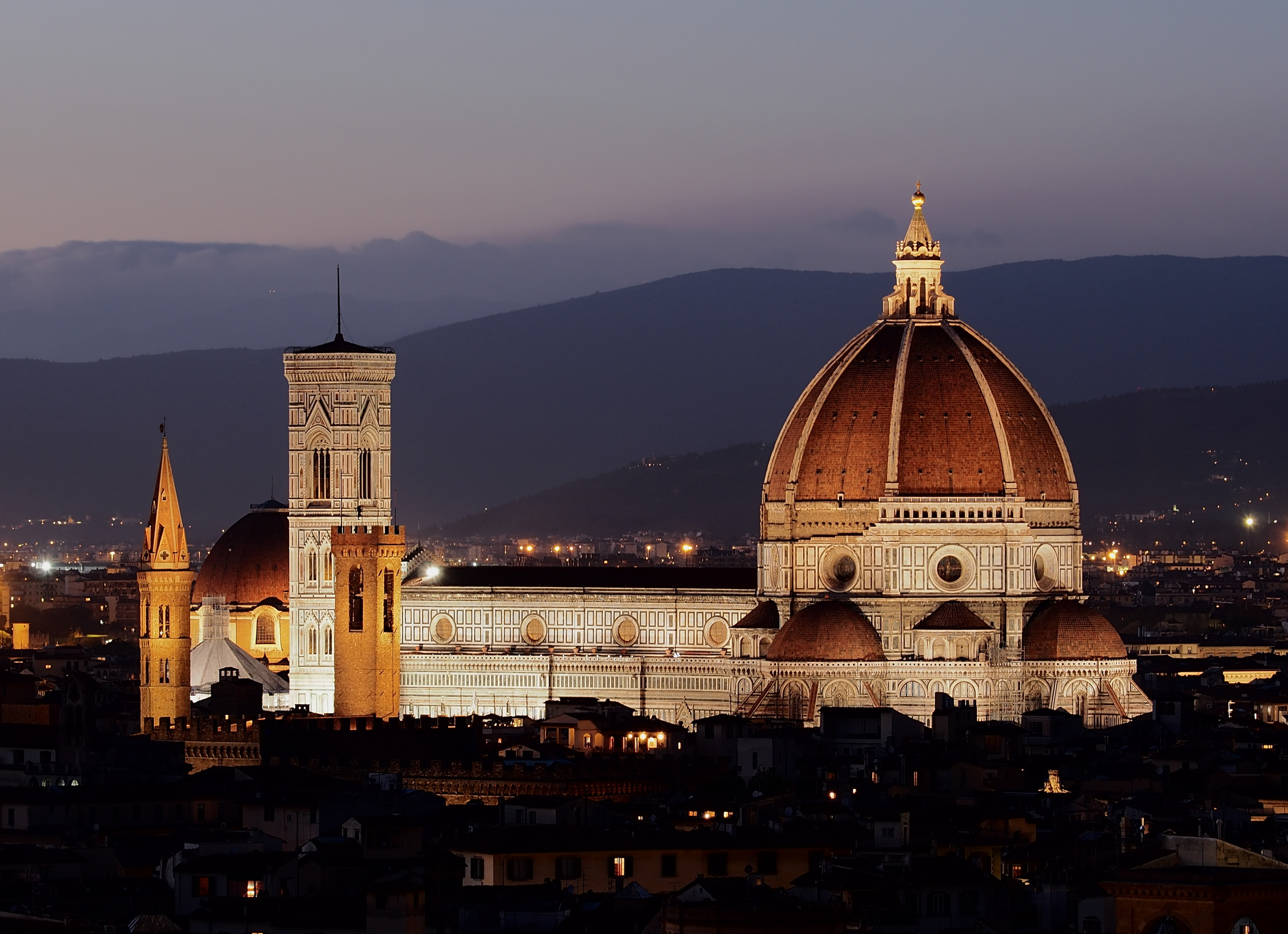
Eighth Stop: Florence Italy: Pictures of Florence  
From Munich, we flew to Florence in northern Italy.  Florence is a beautiful city in Northern Italy, and became home base for the next leg of the journey and scheduled visits and tours.  The architecture and art in Florence is unsurpassed.  Our hotel was in the old part of Florence, and in fact, it was the first hotel in that part of Florence (it has been wonderfully updated, while retaining the charm and elegance it once had).  We were just a few blocks from Il Duomo di Firenze (formally called Cattedrale di Santa Maria del Fiore), the famous Ponte Vecchio, and the Piazza del Signoria with the striking fortified 13th century palace, the Palazzo Vecchio.  This city just invited hours and hours of walking and exploring (and since one of the days was a Sunday with nothing planned, that helped expand the exploration).


Ninth Stop: Bologna Italy: Pictures of Bologna 
A short train ride away from Florence is Bologna Italy.  Bologna is home to the oldest continuously-operating university in the world – The University of Bologna established in 1088 AD. Bologna and the areas around it are also home to a number of industrial and manufacturing companies, including two that were on our scheduled tour.  Lamborghini and Ducati are both located in the Bologna area. 


Tenth Stop: Lamborghini – Bologna: Pictures of Lamborghini 
Our tour of Lamborghini was a bit different than the others in a very special way.  Our first stop on our day with Lamborghini was at the “Lamborghini Family Museum”, where we were hosted by Fabio Lamborghini, nephew to the founder (Ferrucio Lamborghini) of the modern Lamborghini group in 1963.  Fabio Lamborghini was charming and extremely welcoming. He showed us through the family’s museum and history of the development of the Lamborghini brand.  The Lamborghini family designed and manufactured farm equipment and vehicles since the early 20th Century.  The beginnings of the Lamborghini motor car, according to the stories we heard from Fabio, were based in the following:  In the early 1960’s, Enzo Ferrari (also located in the Bologna area) produced a production high performance car for sale.  Ferrucio Lamborghini, who was still designing and manufacturing tractors and farm equipment (and other things like portable air conditioners) decided he wanted one of Enzo Ferrari’s cars.  He bought one, and over the next few months modified it to improve the performance and operation.  He also had a list of other ‘suggestions’ for improvements – so he drove over to Enzo’s, introduced himself, told him he really liked the Ferrari – but had some suggestions for improvements.  Enzo, being a proud man, told Ferrucio “it is not the car, it is the driver” that causes any problems.  To that, Ferrucio said that this would be the last Ferrari he would ever own, because he would go and build his own high performance car.  And that the was the birth of the Lamborghini motor car (thanks Enzo!).


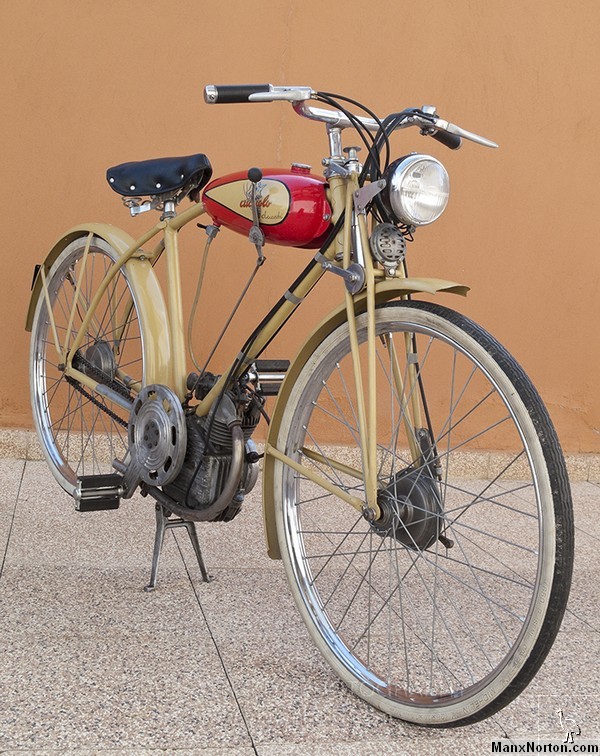
Eleventh Stop: Ducati – Bologna: Pictures of Ducati 
The other planned stop on the tour while in Bologna was Ducati Motorcycles.  It too had a rich and interesting history.  Originally making things like vacuum tubes and radio parts in 1926.  They moved on to manufacture cameras, radios, and electric razors.  But during the Second World War, the German army asked them to develop a small gas motor that could be adapted to bicycles.  And that was the beginning of the Ducati Motorcycle company.


Twelfth Stop: Rome Italy: Pictures of Rome 
After spending time in Florence and Bologna, it was time to take the train to Rome. With only a few days and fewer hours in those days to explore and appreciate Rome, it became a  personal challenge to see as many of the more common sites (the Pantheon, the Spanish Steps, the Trevi Fountain, Piazza Navona,  the Vatican & St. Pauls square, the Coliseum, Circus Maximus, and Bernini’s Triton Fountain).  So again, a walking frenzy.  Fortunately, the charming little hotel I was staying in was literally just a few blocks from many of these (in fact, Bernini’s Triton was directly in front of the hotel).  So I set out to explore – knowing I wanted to get a glimpse of each of the above, and knowing along the way I would “discover” many other gems – which I did.


All in all, a rather whirlwind trip – 6 cities, 6 automobile factory and museum tours, all in 12 days.  And I would do it all over again in aa second!     

Saturday, 20 June 2015

June 19th, 2015 - How can Lean help with luxury production? Just visit Florence Italy to find out!

June 19th, 2015 - How can Lean help with luxury production? Just visit Florence Italy to find out!

Today was filled with subtleties. After 5 days in Germany touring various examples of precision manufacturing, we arrived in Florence Italy.  Now it may seem cliche, but what is so abundantly apparent in Germany as precision, accuracy and attention to detail, is on the surface replaced by a more casual, warm, easiness and appreciation for aesthetic beauty and grace.


Now I say "on the surface" for a few reasons.  First and foremost, it is foolhardy to try and typify an entire country or culture by a few, albeit well intentioned nouns and adjectives. But secondly, because while their appears to be a slower pace, with a greater appreciation for enjoying fine things that please the senses; food, wine, fashion, and conversation, the attention to detail and application of methodical production design and operation belie this casual 'amore della vita' (love of life). 


Now, given we have just settled into the geographic cradle of the Renaissance - where artistic masters flourished and spread their influence across Italy, and eventually the world, it is not surprising at all that the appreciation of "form" often seems to take precedence over "function".  And "passion" trumps "procedures" almost every time.  It is a sensory cornucopia. At every corner; the sights, sounds, fragrances, all contributing to a complete experience of being in a land of appreciation.  


And this was clearly the case at our first stop of the day - the Lamborghini Family Museum with our personal host, Fabio Lamborghini.  Signore Lamborghini was immediately charming, gracious, and filled with family pride and passion.  The way he explained the history of the family business, starting with his Uncle Ferruccio - born to a grape farming family in the Emilia-Romagna region of Italy.  His intense interest in farming machinery, as opposed to farming itself, led to his first real passion, designing and building tractors. His nephew explained that whenever Ferruccio came upon a challenge, he had a need to find a solution.  Whether is was narrow width tractor frames to allow running between the rows of vines, to creating a system for the tractors to use less gasoline when it was in short supply and expensive.  He was a "mechanical genius" Fabio told us. 


He went on to explain that in a strange way, it was Enzo Ferrari that started the Lamborghini high performance sports car.  Actually, it was when Ferruccio Lamborghini bought a Ferrari in 1962 and thought something  wasn't quite working right, and made a modification to improve it that the whole thing started.  Feruccio went to Enzo Ferrari just to show him what he found and how he made it better.  Enzo was a proud man, and insisted there was nothing wrong with the car, it was the driver!! It was at that point that Ferruccio made a decision, and told Enzo he would never buy another one of his cars, he would build his own and it would be better!!! And that set Ferruccio Lamborghini on the path to creating some of the most beautiful, exquisite high performance automobiles to come out of Italy. 


Fabio Lamborghini finished out tour with very gracious offers for individual pictures, and autographing some books for us all. Another testament to the warmth and passion of this part of the world.  


From the Lamborghini Family Museum, we moved on to the Lamborghini production factory. While the Lamborghini brand is typically thought of as an extremely expensive luxury sports car, the company has had its share of financial challenges. Founded in 1963 to compete with other established top performance luxury sports cars like Ferrari.  The company gained wide acclaim in 1966 for the Miura sports coupe, which established rear mid-engine, rear wheel drive as the standard layout for high-performance cars of the era. 


Lamborghini grew rapidly during its first decade, but sales plunged in the wake of the 1973 worldwide financial turndown and the oil crisis. The firm's ownership changed three times after 1973, including a bankruptcy in 1978. Chrysler Corporation took control of Lamborghini in 1987 and sold it to a Malaysian and Indonesian group V'Power Corporation in 1994. In 1998, V'Power sold Lamborghini to the Volkswagen Group where it was placed under the control of the group's Audi division.
As a high performance, luxury automobile, with absolutely top quality materials and craftsmanship, a challenge that Lamborghini had to overcome was both the rate at which they could produce quality automobiles, and the profitability of that production.  When Audi/Volkswagen acquired Lamborghini, they produced 2 cars a day.  All hand made.  One of the things that the new parent company began to introduce were a number of the production system improvements based on Lean that they have been using at many of their other brands, such as Volkswagen, Porsche, Audi, etc.  Today, the Lamborghini factory is producing approximately 19 cars a day.  Most of their production still has the attention to detail and hand made quality that they have been known for.  But they have added process and production improvements, and just enough automation support to help reduce cycle time and increase profitability. 


From there, we moved on to the Ducati Motorcycle plant and museum, a subsidiary of Lamborghini, and therefore an Audi/Volkswagen group company since 2012.  Ducati was established in 1926 and originally began by producing vacuum tubes and radio parts, and moved on to manufacturing radios, cameras, and other consumer products like electric razors.  During the second world war, Ducati developed a small gasoline engine that could be mounted on a bicycle, and began selling them in 1944, and so began the Ducati Motorcycle company.  


Today, Ducati sells motorcycles worldwide, with the USA as their largest market, with Europe (and specifically Italy) as their second largest market. Ducati is producing approximately 40,000 bikes world wide. 


While touring through the Ducati Factory, evidence of early adoption of Lean methods and production techniques were evident such as kanban systems and some kitting. But there was still a large amount of batching and inventory in place.  Relative to other Lean production facilities, it is still early for Ducati. It will be interesting to follow their progress over the next 3 or 4 years to see how much more is possible. 


So while the appreciation of the style, lines, and engineering of German automobiles is well deserved and shared by so many, the sense you get with Italian luxury motorcars is one of smooth curves, fast shapes, and passion for life. 


Monday, 15 June 2015

Two Worlds (don't exactly) Collide!!!

June 15, 2015 - Stuttgart, Germany

Today is an interesting day of contrasts.

Immersed in the old world charm of Europe. The history and architecture. Walking down cobble stoned streets seeing buildings and monuments that are hundreds of years old.  Seeing the landscapes and geography referenced in history books.  


All while the modern day Europe goes on all around us.  The bustling of people rushing through the train stations; coming to work, or travelling between cities. The large modern shopping streets. Everyone tethered to their mobile devices. And the constant humming background sound of any city, people in cars and buses going about their daily lives. 

Today, we spent the day touring through two automotive manufacturing plants. Starting at Porsche plant in Zuffenhausen on the north side of Stuttgart. Followed by a tour of the Mercedes plant in Sindelfingen. 


Both companies have a long history. From the early days of the atomobile in the early 1900's:


to modern, high performance complex vehicles:


Being able to tour both Porsche and Mercedes on the same day was a unique and enlightening experience. While there are the obvious differences in the two manufacturers vehicles themselves, the tours of the two plants exposed many very common and familiar Lean methods, though presenting differences in their implementation.  Seeing the visual signals of green, yellow and red lights to show the status of each workstation or cell; visual management boards to show those on the shop floor what their targets are, and how they are tracking; kanban systems everywhere for parts and inventory replenishment, all elements of Lean that are extremely familiar sights. We could have as easily been back in the Nissan Opama plant on the outskirts of Tokyo, 

Yet, there was clearly a difference in the way the two organizations embraced the Lean approach.  The Mercedes plant, albeit a busier and higher output plant than Porsche ( by a factor of 7 or 8 times as many vehicles per year), was much more like what we experienced in Japan,  Serious, focused, efficient - very much driving to efficiency KPI's.  It was palpable and clearly evidenced by the actions and behaviours on the line.  No-nonesnse keep things flowing to meet the planned output. 

The approach at Porsche was demonstratively different.  The carsu are spectacular. The quality exceptional. But there was a clearly higher "social" engagement within and between the teams. This at least appeared to create a more engaged and happy work groups and teams. All of the same Lean elements werer there. The Andons, the visual management, the huddle boards.  But the team members appeared to be able to do more socializing while building incredible cars. 

So the juxtaposition: Old world vs modern manufacturing; two different approaches to Lean adoption; two different outcomes/benchmarks - but consistently producing high quality, wonderfully engineered, aesthetically beautiful cars.  A pleasure to watch and experience today,


Followed by a wonderful opportunity to refelct and connect. All in all  - an incredibly successful and enlightening day!!  Looking forward to tomorrow!! 


Wednesday, 10 June 2015

Climbing Mountains in order to Rock

"Ain't no mountain high enough......"  (credit to Ashford & Simpson - 1966)


It was a few years after that song was made popular by Marvin Gaye and Tammi Terrell that a small group of west coast outdoor enthusiasts and mountaineers decided to throw conventional retail models to the wind. At that time, mountain climbing wasn't a mainstream sport in the Vancouver BC area.  

 Instead, they chose a model that was more familiar in the farming communities of the prairies - a Co-op model. Until then, the only reliable place to get quality climbing gear was from REI, a well established outdoor retailer from the United States ( www.rei.com ). This group wanted to make all forms of outdooring accessible and affordable to everyone, and wanted to create a business that more closely aligned to their environmental beliefs and principles. They wanted to share their enthusiasm for the outdoors. 

So in 1971, a new and thriving business was created called Mountain Equipment Coop, with 6 members and a whopping $65 of operating capital.  Three years later, by 1974, membership had grown to over 700 like minded outdoor enthusiasts.     

Fast forward to 2015.  From its humble beginnings in Vancouver BC, membership has now grown to over 4 Million with an annual sales revenue of over $336 Million in 2014. MEC is now Canada's largest supplier of outdoor equipment and clothing, with 17 stores in cities across the country. 

Through focused vision, leadership, hard work, and the dedication of the MEC team members, business has grown to a point where MEC has made a decision to open a second Distribution Centre (DC) in the greater Toronto area in Ontario.  Seems like a natural next step in order to simplify the logistics and stocking of their growing number of stores in the east.  

But wait! Start to peel back just one or two layers of that onion, and suddenly the intricacies and linkages all through the supply chain start to emerge. Realizing that the flow of goods from Asia, right from the selection of fabrics at the mills, to the logistics to deliver that cloth to over a dozen different clothing manufacturing factories, to the packing and shipping of finished goods to MEC were all tightly linked in the existing business practices and processes. 

Not insurmountable - but complex. Along with 4 other Master Blackbelt candidates, and working shoulder-to-shoulder with the Lean Sensei senior coaches, we set about to help the MEC team break down the complex supply chain to find ways to accommodate both the agility they need while maintaining a means for specific controls.  Working to facilitate a number of parallel activities, the MEC teams were able to identify many recommendations that would allow them to address two of the most critical issues identified.   

First, the uncoupling of each "order" from the process to "release" parts of the order on a demand basis while still meeting the negotiated "minimum order point" with the manufacturing factories. This was a critical change to their supply chain process that would allow them to move to more of a "pull" model, and avoid transporting and having to store stock that isn't all needed at once.  And second, implement a number of changes to the process at MEC that precedes the ordering of manufactured goods.  Changing the process to reduce the cycle time and eliminate unnecessary delays and errors by finding ways to consolidate a number of disparate data sources into a single version of the truth that can reliably be used to make better and faster decisions with, 

The real credit of course goes to the MEC team members that participated in the 2 days of Kaizen. All they really needed was to be given permission to make changes, the time to properly consider options and test assumptions, and some coaching in Lean supply chain methodology.  

It was such a treat to work with so many participants from MEC that all wanted to find improvements and make a difference.  I often reflect on how "Lean" isn't the tough part of a continuous improvement initiative - it's changing the culture of an organization and its team members that typically is the most difficult.  In the case of MEC, we were treated to an organization that had a clearly defined and positive culture already.  That made our jobs incredibly easy and extremely rewarding. 

All in all - a very positive experience - but so far, they all have been! 


Friday, 29 May 2015

The new math: 2 + 20 + 1 + 2 = "a whole bunch!"...... or, What can you get done in 2 days, with 20 Executives, 1 Senior Lean Sensei Coach, and 2 MBB Candidates.....

This is a story about one organization's "Journey to a Lean"  -  and specifically, about a 2 day Executive Lean Workshop.


Earlier this week, myself and another Master Blackbelt candidate, along with David Chao the Senior Coach-Sensei from LSI spent 2 days in a Lean Executive Workshop designed to help an organization develop and articulate a strategy for the adoption and roll-out of Lean.

So picture this - 18 to 20 very busy, very focused, and very bright senior executives, from the CEO down, and across all areas of the organization. Senior executives responsible for things like Operations, Human Resources, Finance, Strategy & Planning, and Information Technology just to name a few. A room of what you might expect to be  "type A" people - and you wouldn't be disappointed. Just getting their time and attention for two contiguous days, when they are all available at the same time, is typically a Herculean undertaking.  They come to the room with various levels and understandings of what Lean is and what it can do for their organization.

In just 2 days, this group of executives need to come to a common and shared understanding of what Lean is and can do, and a shared vision of where and how they want to leverage it. They need to see the opportunities, and lay out a pragmatic plan and roadmap to achieve their strategic goals with respect to Lean.  Oh, and did I mention in those same 2 days, they first need to develop and agree on what those goals are.

Many times during my Lean education, I have heard a coach or sensei say "trust the process".   This is usually during a period of divergence and even chaos. And not surprisingly, Lean is no different than many other methodologies that try to identify, quantify and implement improvements.  They all typically diverge as you head in - as you start to pull on small threads and tug at ideas.  The focus ends up broadening, often to a point where it seems like you have lost the path to the original desired outcome.  But like all those other methodologies, as you push on, you start to converge. You start to narrow the focus and pinpoint specific opportunities and ideas.  This exercise was similar.  We had to let the participants explore their way out (diverge) to consider and examine many things, before turning them to focus and refine their thinking to practical and relevant strategies and actions that will move them forward with their program to adopt and deploy Lean.

It was reassuring to see this in action again.  And the "trust the process" once again ring true.  By noon on the second day, the executives were divided into teams with each team focusing in and working on identifying specific actions and strategies to deal with things like defining a strong and common vision.  Looking for explicit ways to align their Lean strategy to corporate values and vision.  Discussing leadership actions and plans to ensure consistent messaging, proper modelling, and coaching and mentoring were in place.  Working to identify ways to unite and engage the teams that work there. Making specific execution plans to move them forward.  And discussion ideas and activities that would help to ensure progress is fostered, nurtured and sustained.

By the end of day two, the group had developed a 1 year roadmap with activities and initiatives related to all of the above areas of focus, linked and integrated with each other where necessary. The result - a game plan, a strategy to move the organization forward with Lean.  Not a bad 2 days work.  It was amazing to participate.